Spray Foam vs. Fiberglass in a North Carolina Crawl Space: What Actually Holds Up
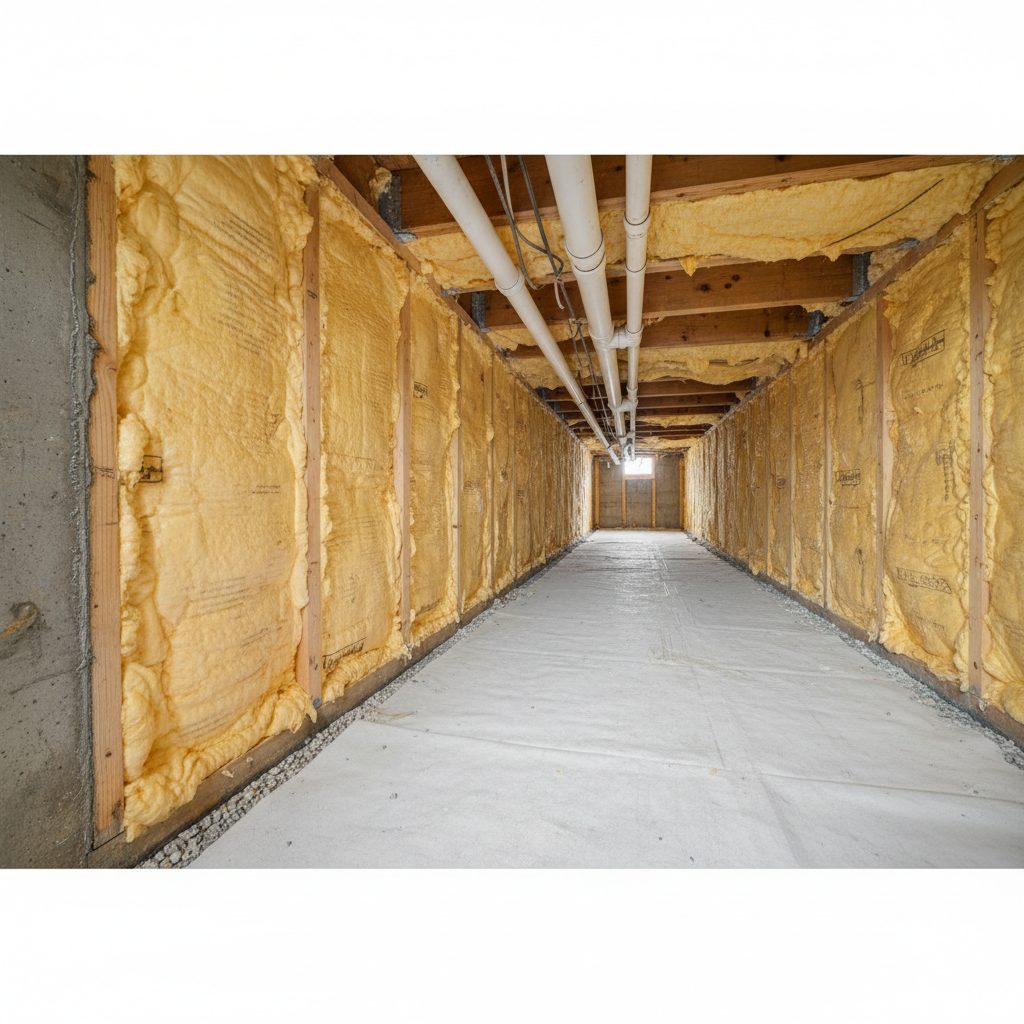
If you own a home in the North Carolina Piedmont, there's a good chance it sits on a crawl space — and a good chance that crawl space is costing you money every month. Between our long, humid summers and the freeze-thaw swings of a Triad winter, the space under your floor works harder than almost any other part of the house. The insulation you put down there matters more than most homeowners realize, and the two most common choices — fiberglass batts and spray foam — behave very differently once the humidity rolls in.
Why fiberglass struggles under a Carolina house
Fiberglass batts are cheap, familiar, and everywhere. In a dry wall cavity they do a reasonable job. In a crawl space, they tend to fail in slow motion. Fiberglass insulates by trapping air — but it does nothing to stop air movement or moisture, and a crawl space is full of both. Over a few humid summers, batts stapled to the floor joists soak up moisture, get heavy, and sag away from the subfloor. Once they droop, they stop insulating. Worse, damp fiberglass becomes a comfy home for mold and a buffet for pests. Most of the sagging, blackened insulation our crews pull out of Triad crawl spaces is fiberglass that was doing more harm than good.
How spray foam changes the equation
Spray foam works on a different principle. Instead of just slowing heat, it expands to seal the space — creating a continuous air and moisture barrier that fiberglass can't. In a crawl space, that's exactly the problem you're trying to solve. There are two types worth knowing:
- Open-cell foam is lighter and more affordable, expands a lot, and excels at air sealing and sound dampening. It's a great fit for interior walls and attic rooflines.
- Closed-cell foam is denser, has a higher R-value per inch, and — critically for us — acts as a moisture barrier. That's why it's the standard choice for crawl spaces, rim joists, and metal buildings here in the humid Southeast.
A properly encapsulated, closed-cell crawl space stays dry, holds temperature, and stops the ground-sourced humidity that drives up your power bill and rots your floor framing.
What it actually does for your house
Homeowners who seal the crawl space usually notice three things fast: the floors stop feeling cold, the upstairs stops swinging hot and cold, and the power bill settles down because the HVAC isn't fighting a leaky envelope all day. Because closed-cell foam controls moisture, you also cut off the damp that leads to mold, musty smells, and wood rot — problems that get expensive long before you ever see them.
What to expect if you make the switch
Most crawl space jobs are completed in a single day. A good contractor will inspect for existing moisture or drainage issues first (foam seals a space; it doesn't fix standing water), remove any failed fiberglass, and then apply closed-cell foam to the walls and rim joists. Cost depends on square footage and thickness, so the honest answer to "what does it cost" is: get a couple of on-site quotes. In the Triad, a straightforward crawl space encapsulation typically lands in the low thousands — and pays itself back through lower bills and avoided repairs.
If your crawl space is on the older side, feels damp, or you've never looked under there at all, it's worth having a spray foam specialist take a look. It's one of the few home upgrades that improves comfort, energy use, and the long-term health of the structure all at once.
Free crawl space spray foam quote in Greensboro
Local, licensed, and insured — serving Greensboro, High Point & the Triad. No-obligation on-site estimates.
📞 Call (336) 536-3688