Open-Cell vs. Closed-Cell Spray Foam: Which Is Right for Your Triad Home?
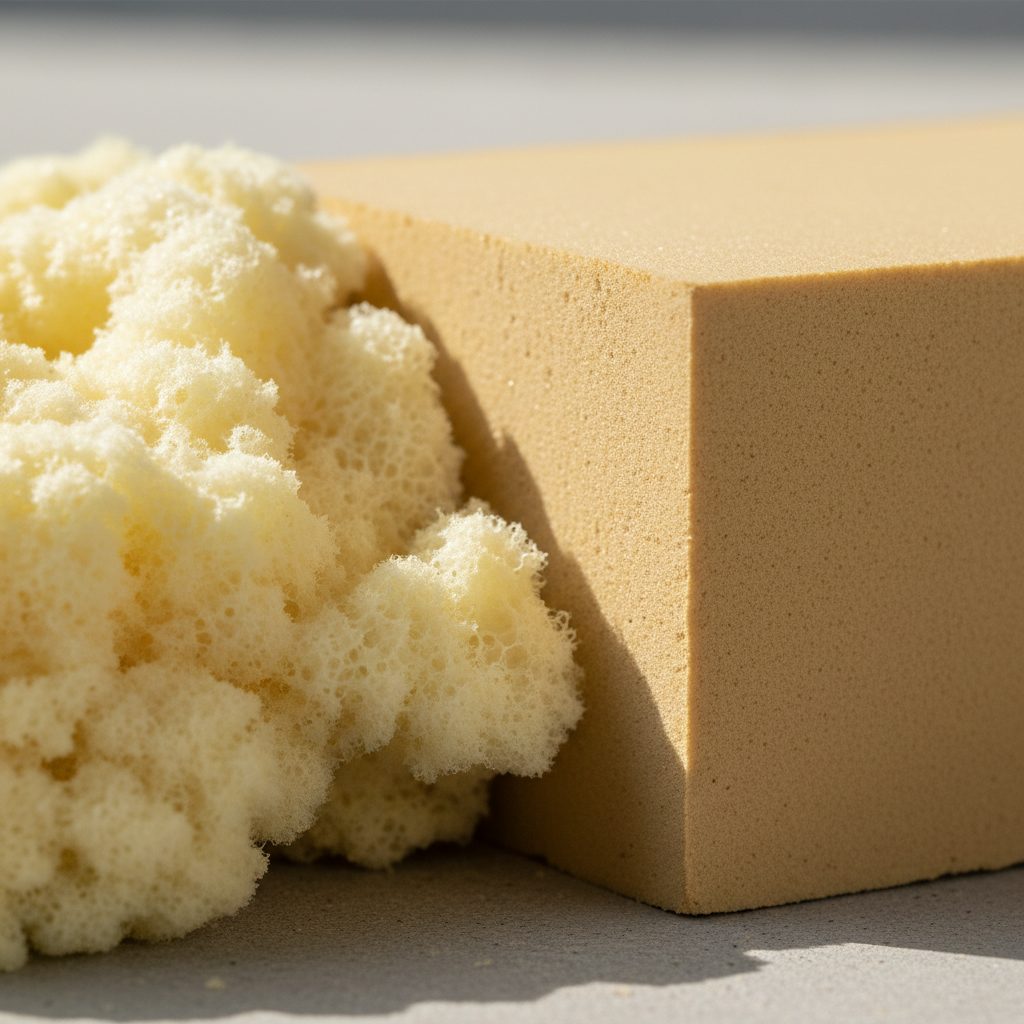
If you're researching spray foam insulation for a home in Greensboro, High Point, Winston-Salem, or anywhere else in the Triad, you've likely run into a fork in the road: open-cell or closed-cell? Both are excellent insulators that outperform traditional fiberglass batts, but they behave differently, cost differently, and suit different parts of a house. Here's an honest breakdown to help you make the right call for our North Carolina climate.
The Basic Difference
Spray foam insulation is made by mixing two liquid chemicals that react and expand on contact, filling cavities and sealing gaps as they cure. The difference between open-cell and closed-cell comes down to cell structure:
- Open-cell foam has cells that stay open and are filled with air, making it soft, spongy, and lighter. It expands significantly during application.
- Closed-cell foam has cells that are packed tightly and filled with a gas that helps it insulate better. It cures rigid and dense, more like a hard foam board.
That structural difference drives almost every practical decision below.
R-Value and Insulating Power
R-value measures resistance to heat flow — higher means better insulation per inch.
- Open-cell foam typically provides around R-3.5 to R-3.7 per inch.
- Closed-cell foam typically provides around R-6 to R-7 per inch.
Closed-cell packs roughly double the R-value into the same thickness, which matters most in tight spaces like rim joists, roof decks with limited rafter depth, or exterior walls where you can't afford to lose interior square footage to thick insulation.
Moisture, Vapor, and NC Humidity
This is where the choice gets locally relevant. The Triad sees hot, humid summers and generally mild but occasionally damp winters, and moisture management is a real concern in crawl spaces, attics, and exterior walls throughout the region.
- Closed-cell foam is largely resistant to water absorption and acts as a semi-permeable to impermeable vapor barrier (depending on thickness). It holds up well in areas prone to occasional moisture exposure, like crawl spaces or band joists near grade.
- Open-cell foam is vapor-permeable and can absorb water if it gets wet, which means it's not the best choice in areas with a real risk of bulk water intrusion. It performs well in interior wall cavities and attic applications where moisture exposure is minimal and some breathability is actually desirable.
For Greensboro homes with vented or semi-conditioned crawl spaces, closed-cell is often preferred along the foundation walls specifically because of its moisture resistance.
Sound Dampening
If noise reduction is part of your goal — quieting a bedroom near a busy street, a home office, or a media room — open-cell foam has an edge. Its softer, spongier structure absorbs sound waves more effectively than the dense, rigid closed-cell version.
Structural Rigidity
Closed-cell foam cures hard enough that it actually adds a measurable degree of structural rigidity to the assembly it's sprayed into — some Triad homeowners use it specifically in roof decks or additions where extra racking strength is a bonus. Open-cell foam doesn't add structural value; it's purely a thermal and air-sealing product.
Cost Comparison
Spray foam costs more upfront than traditional insulation, but the trade-off is better air sealing, lower energy bills, and fewer moisture problems over time. Rough ranges for the Triad market:
- Open-cell foam: generally runs somewhere in the neighborhood of $1.00–$1.75 per board foot installed, though this varies with access, quantity, and job complexity.
- Closed-cell foam: generally runs higher, often in the $1.50–$3.00+ per board foot range, reflecting the denser material and higher material cost.
For a full attic or whole-home project, total costs can range widely — anywhere from a couple thousand dollars for a small attic to well into five figures for comprehensive whole-house encapsulation. The only way to get an accurate number is a walkthrough of your specific home, since square footage, cavity depth, accessibility, and existing insulation all factor in. Be cautious of any company quoting a firm price over the phone without seeing your house.
Where Each Type Makes Sense in a Triad Home
- Attics: Open-cell is common for encapsulated (conditioned) attics where you're spraying the underside of the roof deck and don't have major moisture exposure. Closed-cell can be used too, especially if rafter depth is shallow.
- Crawl spaces: Closed-cell is typically favored on foundation walls due to ground moisture and flood-plain considerations common in parts of Guilford, Forsyth, and surrounding counties.
- Exterior walls (new construction or gut renovations): Both are used; closed-cell offers a bit more of a moisture and air barrier per inch, while open-cell is often more budget-friendly for standard 2x4 or 2x6 cavities.
- Rim joists and band boards: Closed-cell is generally preferred here for its moisture resistance and higher R-value in a tight space.
- Interior walls (sound control): Open-cell is the go-to for noise reduction between rooms.
What to Look for in a Spray Foam Contractor
- Willingness to inspect your home in person before quoting — attics, crawl spaces, and wall cavities all affect the recommendation.
- Clear explanation of which product they recommend for which area, and why, rather than a one-size-fits-all pitch.
- Proper safety practices during installation, since spray foam requires ventilation and cure time before the space is safe to re-occupy.
- Transparent, itemized quotes broken down by area and board footage rather than a vague lump sum.
- Experience with local building codes and moisture conditions specific to North Carolina's climate zone.
The Bottom Line for Greensboro Homeowners
Neither open-cell nor closed-cell spray foam is universally "better" — they're tools suited to different jobs. Many well-insulated Triad homes actually use a combination: closed-cell where moisture resistance and R-value density matter most, and open-cell where budget, sound dampening, or breathability are priorities. The right mix depends on your home's construction, age, and how it's currently performing.
If you're not sure which approach fits your house, the best next step is a straightforward, no-pressure evaluation. Greensboro Spray Foam Pros offers free, in-home quotes throughout Greensboro and the greater Triad — we'll assess your attic, crawl space, or walls and give you a clear, honest recommendation with real numbers. Reach out today to schedule your free local quote.
Free spray foam insulation quote in Greensboro
Local, licensed & insured — serving Greensboro & the Triad. No-obligation on-site estimates.
📞 Call (336) 536-3688