How Much R-Value Do You Need in a North Carolina Attic?
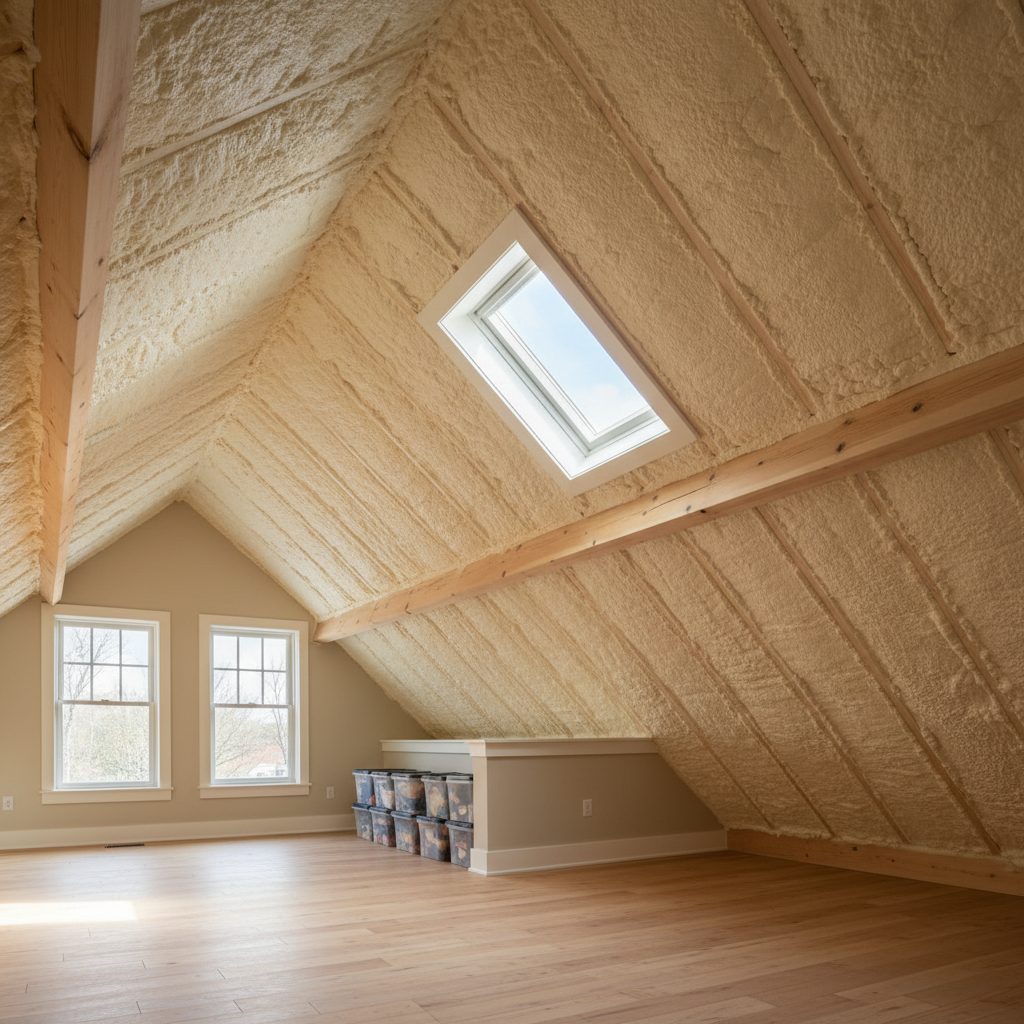
If you've ever shopped for insulation or gotten a quote from a contractor, you've probably seen "R-value" thrown around without much explanation. R-value measures how well a material resists heat flow — the higher the number, the better it insulates. For homeowners in Greensboro and across the Piedmint Triad, knowing the right R-value for your attic is the first step toward a comfortable home and a lower power bill.
The short answer: most North Carolina homes need somewhere between R-38 and R-60 in the attic, depending on your specific home, climate zone, and insulation type. Here's how to figure out where you fall in that range.
What the Building Code Requires in North Carolina
North Carolina is split into two climate zones for energy code purposes: Zone 3 (the southern and coastal parts of the state) and Zone 4 (which includes Greensboro and most of the Piedmont and mountain regions). The North Carolina Energy Conservation Code, which follows a modified version of the IECC, sets minimum attic insulation levels based on zone:
- Climate Zone 3 (southeastern NC): R-30 to R-38 minimum
- Climate Zone 4 (Greensboro, Winston-Salem, High Point, and most of the Triad): R-38 to R-49 minimum
These are code minimums for new construction, not necessarily the ideal target for existing homes. Many energy auditors and insulation contractors recommend pushing toward R-49 to R-60 in Piedmont attics, especially if you're insulating from scratch or gutting an older attic down to the joists.
Why Greensboro's Climate Matters
The Triad sits in a mixed-humid climate — we get real winter cold snaps (occasional nights in the teens or single digits) and long, hot, humid summers with plenty of days in the 90s. That combination means your attic insulation has to work double duty: keeping heat in during winter and keeping it out (along with humidity) during summer.
Older homes in Greensboro neighborhoods like Fisher Park, Sunset Hills, or the Lindley Park area were often built with R-11 to R-19 in the attic, if that — sometimes just a few inches of old fiberglass batts that have settled and compacted over decades. That's roughly half of what current recommendations call for, which explains why so many older Triad homes have hot upstairs bedrooms in July and cold floors in January.
R-Value Isn't the Whole Story
Here's where a lot of homeowners get misled: R-value only tells you about resistance to heat conduction. It doesn't account for air leakage, which in most attics is actually the bigger problem. A batt of fiberglass rated R-38 that's full of gaps, compressed corners, and air leaks around can lights and duct penetrations will perform far below its rated value in real life.
This is one of the main reasons spray foam insulation has become so popular in the Triad. Closed-cell and open-cell spray foam don't just add R-value — they create an air seal at the same time. Because spray foam expands to fill cracks, gaps, and irregular framing, you get both insulation and air sealing in a single application, which fiberglass and blown-in cellulose can't do on their own.
Practically speaking, this means a spray foam attic often performs better in real-world comfort and energy savings than a fiberglass attic with a higher R-value on paper, simply because there's no air leakage undermining the numbers.
How Much R-Value Does Spray Foam Actually Provide?
Spray foam R-values per inch are generally higher than traditional insulation:
- Open-cell spray foam: roughly R-3.5 to R-3.8 per inch
- Closed-cell spray foam: roughly R-6 to R-7 per inch
- Fiberglass batts: roughly R-3 to R-3.8 per inch (but heavily dependent on installation quality)
- Blown cellulose: roughly R-3.2 to R-3.8 per inch, but it settles over time and loses some effectiveness
Because closed-cell foam packs more R-value into less thickness, it's a good option for tight attic spaces, roof decks, or homes where you want an unvented "conditioned attic" assembly. Open-cell foam is lower density and less expensive per inch, and it's commonly used for full attic encapsulation projects where budget and soundproofing matter as much as raw R-value.
What It Costs to Insulate a Greensboro Attic
Costs vary quite a bit based on attic size, accessibility, whether old insulation needs to be removed, and which type of foam you choose. As a general range for Triad homes:
- Open-cell spray foam attic insulation: typically $1.25 to $2.00 per square foot of attic floor, depending on depth and access
- Closed-cell spray foam: typically $2.50 to $4.00+ per square foot, since it's denser and more expensive per board foot
- Removal of old, contaminated, or rodent-damaged insulation before foam application: often an added cost, usually a few hundred to over a thousand dollars depending on attic size
For a typical 1,500 to 2,000 square foot attic floor, that often lands somewhere in the $2,500 to $8,000 range for spray foam, with the final number depending heavily on foam type, thickness, and whether you're doing a full encapsulation (spraying the roof deck and gable ends to create a conditioned attic) versus insulating just the attic floor. Getting a couple of quotes with a clear breakdown of square footage, foam type, and thickness is the best way to know you're comparing apples to apples.
Signs Your Attic Needs More R-Value
You don't necessarily need to climb into your attic with a tape measure to know something's off. Common signs Greensboro homeowners run into include:
- Upstairs rooms that are noticeably hotter or colder than the rest of the house
- High summer cooling bills despite a newer HVAC system
- Ice damming or visible frost patterns on the roof after cold snaps
- Ductwork running through an attic that feels like an oven in July
- Visible daylight or drafts around the attic hatch or can lights
If any of these sound familiar, it's worth having someone measure your existing insulation depth and check for air leakage before assuming you just need "more of the same" insulation piled on top.
Getting the Right Number for Your Home
The R-38 to R-60 range is a solid starting point for Triad attics, but the right answer for your house depends on your roof design, ductwork location, existing insulation condition, and whether you want a vented or unvented attic assembly. A quick on-site evaluation is really the only way to know for sure what your home needs and which insulation type makes the most sense for your budget.
Greensboro Spray Foam Pros offers free, no-pressure attic evaluations and quotes for homeowners across Greensboro and the Triad. We'll take a look at your current insulation, talk through your options, and give you an honest recommendation — whether that's spray foam, a hybrid approach, or simple air sealing. Reach out today to schedule your free local quote.
Free spray foam insulation quote in Greensboro
Local, licensed & insured — serving Greensboro & the Triad. No-obligation on-site estimates.
📞 Call (336) 536-3688