How to Insulate a Metal Building or Pole Barn in the Triad
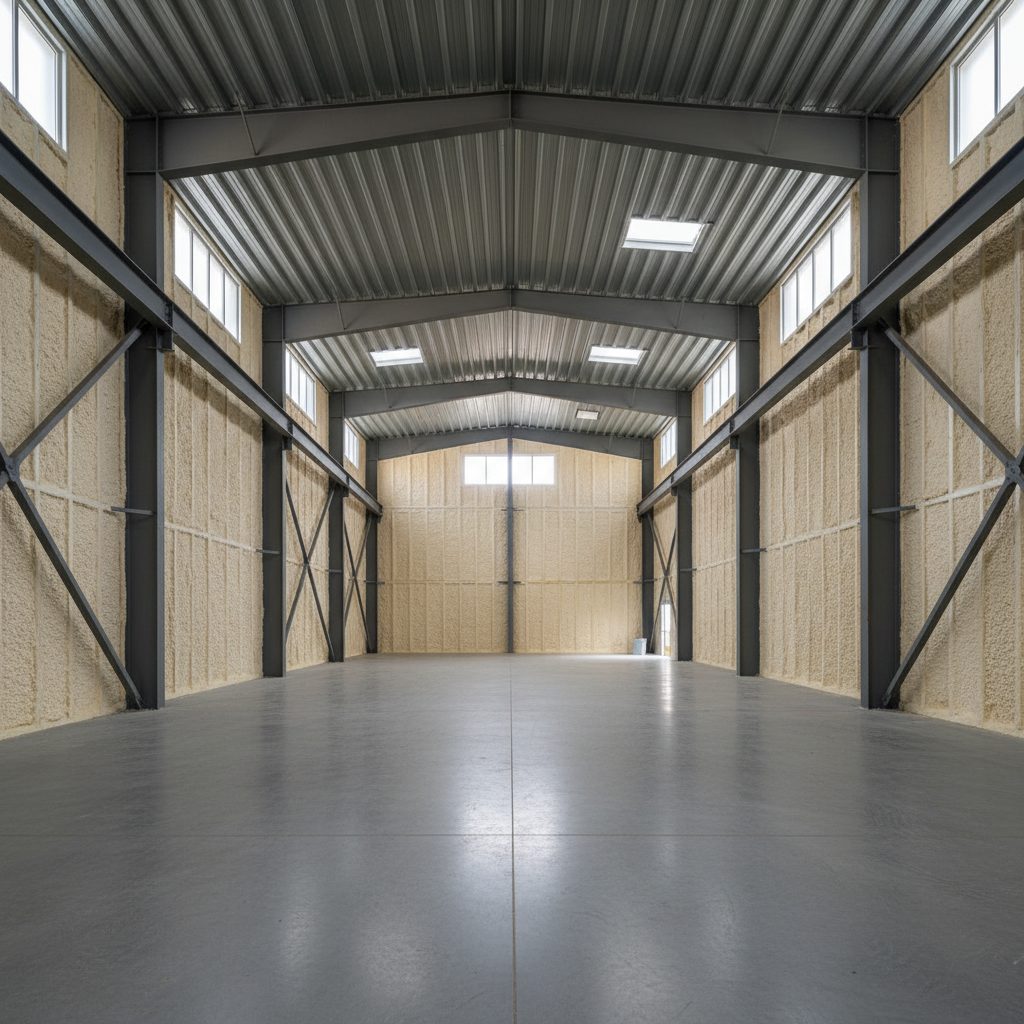
Metal buildings and pole barns are popular across the Triad for workshops, garages, barns, and even converted living spaces — but they come with a specific insulation challenge. Bare metal roofing and siding conduct heat and cold fast, and without the right barrier, these structures can turn into ovens in a Greensboro summer and damp, condensation-prone boxes in winter. Getting the insulation right isn't just about comfort; it protects the structure itself and whatever you're storing or doing inside.
Why Metal Buildings Need a Different Approach
Unlike a stick-built house with stud cavities designed for batt insulation, metal buildings and pole barns often have exposed girts, purlins, and large uninterrupted panels. Traditional fiberglass batts can work, but they're prone to sagging, gaps, and moisture problems in a metal structure — especially where the metal skin meets a wood or steel frame. Condensation is the biggest enemy here. When warm, humid Piedmont air meets a cold metal roof or wall, moisture forms on the interior surface, which leads to rust, mold, and rot over time.
This is why so many pole barn and metal building owners in the Triad are turning to spray foam insulation instead of, or in addition to, traditional batts.
Spray Foam Insulation for Metal Buildings
Spray foam is applied directly to the underside of the metal roof and walls, where it adheres tightly and eliminates the air gaps that cause condensation. There are two main types worth knowing about:
- Open-cell spray foam — lighter, less expensive, and a good sound dampener. It's vapor-permeable, which works well in many applications but may need a vapor retarder strategy in certain climates or uses.
- Closed-cell spray foam — denser, more rigid, and it acts as its own vapor barrier. It also adds real structural rigidity to metal panels and holds up better if moisture ever does get near it, which makes it a popular choice for barns, workshops, and buildings near livestock or higher humidity.
Both types stick permanently to the metal roof deck and wall panels, which solves the condensation problem at its source rather than just slowing it down. That's the main reason spray foam has become the go-to solution for metal building owners throughout North Carolina.
What About Batts, Reflective Foil, or Rigid Board?
These options aren't wrong, and they can be budget-friendly, but each has tradeoffs in a metal building:
- Fiberglass batts between purlins or girts are affordable but tend to sag over time and don't stop air infiltration or condensation well on their own.
- Reflective foil/bubble insulation can help reflect radiant heat but offers little true R-value and doesn't address condensation the way foam does.
- Rigid foam board works reasonably well on walls but is harder to fit tightly around irregular framing and roof panels, leaving gaps where air and moisture sneak through.
For a barn used purely for equipment storage with no climate control, a lighter-touch approach may be all you need. But if you're heating, cooling, or spending real time in the building, spray foam typically outperforms these alternatives over the life of the structure.
The Insulation Process, Step by Step
- Assessment — A contractor walks the building, checks the roof pitch and framing type, notes any existing moisture or rust issues, and discusses how you use (or plan to use) the space.
- Prep — Interior surfaces are cleaned of dust, cobwebs, and loose debris so the foam adheres properly. Any electrical, HVAC, or ventilation work is best planned before spraying.
- Application — Foam is sprayed onto the roof deck and/or wall panels in controlled lifts to reach the target thickness and R-value. Crews mask off areas that shouldn't be sprayed, like windows, doors, and vents.
- Cure and inspection — Foam cures within hours, and a good contractor will walk the space with you afterward to confirm full, even coverage, especially in corners and around penetrations.
Honest Cost Ranges
Pricing for metal building and pole barn insulation depends heavily on square footage, roof pitch, ceiling height, foam type, and how much of the building (roof only vs. roof and walls) you're treating. As a general guideline in the Triad market:
- Open-cell spray foam typically runs on the lower end per board foot and is a common choice for roof decks in barns and workshops.
- Closed-cell spray foam costs more per board foot but delivers a higher R-value per inch and doubles as a vapor barrier and structural stiffener — often worth it for buildings with any moisture exposure.
- Total project cost for a mid-size pole barn or metal shop can range widely, from a few thousand dollars for a small roof-only job to well into five figures for a fully insulated, larger structure with both roof and wall coverage.
The best way to get an accurate number is a site visit — square footage alone doesn't tell the whole story once you factor in framing style, access, and desired R-value.
What NC's Climate Means for Your Building
Greensboro and the greater Triad sit in a humid subtropical climate zone: hot, sticky summers, cold snaps in winter, and a lot of humidity swings in between. That combination is exactly what drives condensation problems in uninsulated or poorly insulated metal buildings. A closed-cell or well-installed open-cell foam system helps regulate interior temperatures, reduce moisture-driven rust and rot, and can meaningfully cut heating and cooling costs if the building is conditioned. Even unconditioned barns benefit from reduced condensation dripping onto equipment, hay, or vehicles stored inside.
What to Look for in a Contractor
- Experience specifically with metal buildings and pole barns, not just residential attics — the application technique differs.
- Clear explanation of open-cell vs. closed-cell tradeoffs for your specific use case.
- Willingness to do an in-person site visit before quoting.
- Straightforward answers about cure times, ventilation needs, and fire-code considerations for spray foam.
- Local references or completed projects you can see in the Triad area.
Whether you're finishing out a workshop, protecting equipment in a pole barn, or converting a metal building into usable living or work space, getting the insulation right the first time saves money and headaches for years to come. If you're weighing your options for a metal building or pole barn anywhere in Greensboro or the Triad, Greensboro Spray Foam Pros offers free, no-pressure on-site quotes — reach out and we'll help you figure out the right approach and a realistic budget for your space.
Free spray foam insulation quote in Greensboro
Local, licensed & insured — serving Greensboro & the Triad. No-obligation on-site estimates.
📞 Call (336) 536-3688