Is Spray Foam Insulation Safe? Off-Gassing, Cure Time, and the Facts for Greensboro Homes
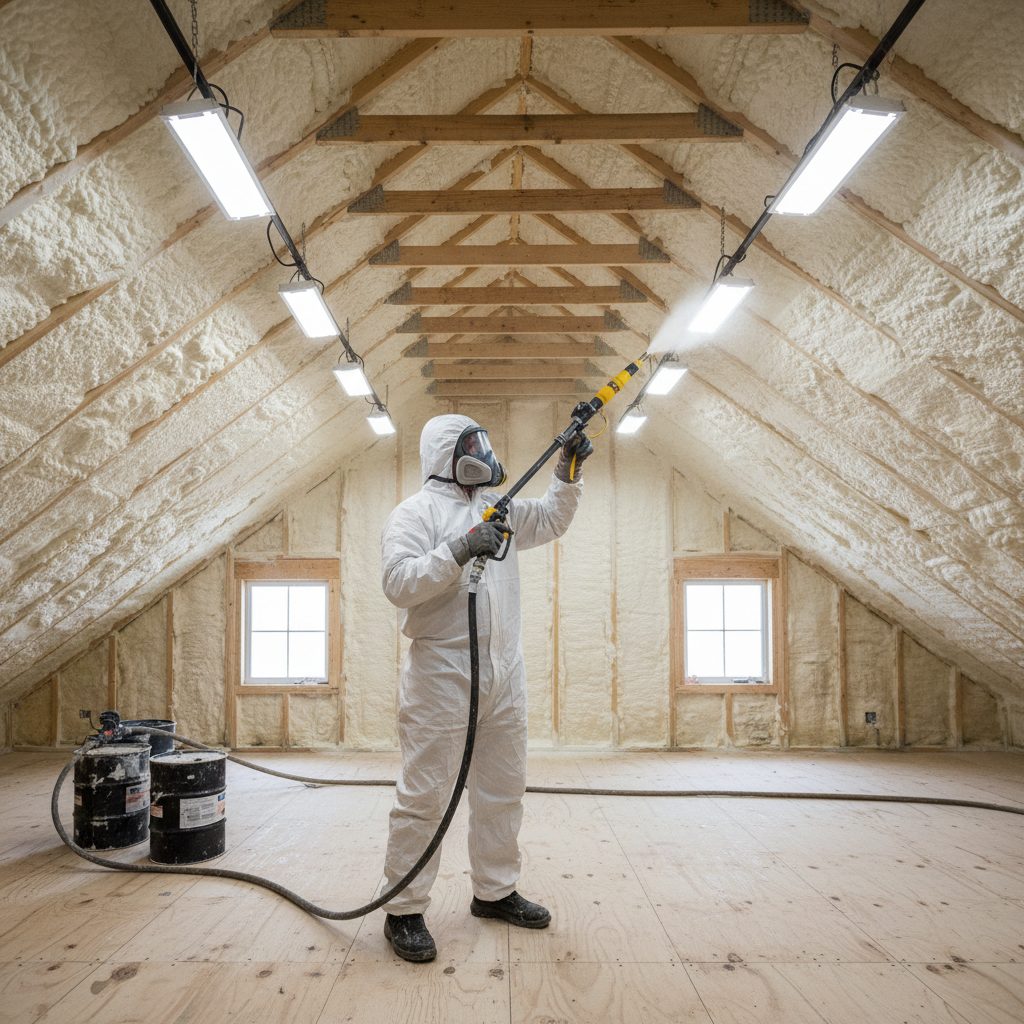
If you're considering spray foam insulation for your Greensboro home, you've probably come across conflicting information online — some of it accurate, much of it exaggerated. Homeowners deserve straight answers about off-gassing, cure times, and what actually happens during and after installation. Here's what the science and the industry standards actually say.
How Spray Foam Insulation Works
Spray foam insulation is created by combining two liquid chemical components — commonly referred to as Side A (isocyanate) and Side B (polyol resin) — at the tip of a spray gun. When mixed, they react chemically and expand into a solid foam within seconds, filling cavities, sealing gaps, and hardening into an air barrier. This is true for both open-cell and closed-cell spray foam, the two main types used in Triad homes.
Because the reaction is chemical, not just physical drying, there's a period during and immediately after installation when the material is curing and releasing gases as part of that reaction. This is the source of most safety questions, and it's worth understanding clearly rather than fearing.
What "Off-Gassing" Actually Means
During the chemical reaction, spray foam releases volatile organic compounds (VOCs) and blowing agents into the air. This is normal and expected — it's not a sign of a defective product or a poor installation. The amount and duration of off-gassing depends on:
- The type of foam used (open-cell vs. closed-cell)
- Ambient temperature and humidity during application
- How accurately the two components were mixed (a proper 1:1 ratio matters)
- Ventilation in the space during and after installation
Reputable manufacturers and industry bodies, including the American Chemistry Council's Center for the Polyurethanes Industry, publish guidance on re-entry times because the concern is well understood and manageable — not because the product is inherently hazardous when installed correctly.
Cure Time: What to Expect
Spray foam cures in stages. The foam is typically tack-free and can be walked near within minutes, but full curing — when off-gassing drops to negligible levels — takes longer. General guidance looks like this:
- Re-occupancy time: Most manufacturers recommend homeowners, pets, and anyone not wearing protective equipment stay out of the treated area for 24 hours after installation.
- Full cure: The foam itself is dry and stable within hours, but off-gassing continues to decrease over the following days as the chemical reaction fully completes.
- Odor fade: A mild chemical smell is common for a day or two after application and should fade steadily. A strong, persistent odor beyond that timeframe is unusual and worth a follow-up call to your installer.
A well-run job includes ventilating the work area with fresh air — opening windows, running fans, or using the HVAC system's fresh-air intake — to help clear residual gases faster, especially important in the tighter, more humid conditions of a Piedmont summer.
Why Installation Quality Matters So Much
Almost every documented spray foam health complaint traces back to installation problems, not the material itself. Common culprits include:
- Incorrect mixing ratios of the two chemical components
- Applying foam too thick in a single pass, which traps heat and slows curing
- Poor ventilation during application and the curing period
- Rushing re-entry before the recommended waiting period
This is exactly why choosing an experienced, factory-trained crew matters more with spray foam than with almost any other insulation type. At Greensboro Spray Foam Pros, our technicians are trained on proper equipment calibration, ambient condition requirements, and ventilation protocols for every job — because the safety of the finished product depends entirely on how carefully it's installed.
Is Spray Foam Safe Once It's Cured?
Yes. Once fully cured, spray foam insulation is chemically stable and considered inert. It doesn't continue to release meaningful VOCs, it doesn't off-gas indefinitely, and it doesn't break down and re-emit chemicals over time under normal conditions. This is one of the reasons spray foam has become common in attics, crawl spaces, and rim joists throughout Greensboro and the greater Triad — it creates a long-term air seal without ongoing chemical concerns.
It's also worth noting that spray foam doesn't support mold growth the way organic materials can, which is a real advantage in North Carolina's humid climate, where moisture intrusion in crawl spaces and attics is a constant challenge for homeowners.
Who Should Be Extra Cautious
While cured spray foam is safe for typical households, a few situations call for extra care during the installation window itself:
- Pregnant women, infants, and people with respiratory conditions should avoid the treated area until full re-entry time has passed and the space has been ventilated.
- Anyone with chemical sensitivities should discuss timing with their installer and consider scheduling the job for a period when they can stay elsewhere overnight.
- Pets should be kept out of treated spaces and away from work areas until cleared by the crew.
What Spray Foam Insulation Costs in the Triad
Cost varies based on foam type, square footage, and accessibility, but homeowners in the Greensboro area typically see:
- Open-cell spray foam: generally runs lower per board foot and is common in attic and interior wall applications.
- Closed-cell spray foam: costs more per board foot but offers higher R-value per inch and adds structural rigidity, making it popular for crawl spaces and rim joists.
- Whole-attic or crawl space jobs in the Piedmont region often range from roughly $1,500 to $5,000+, depending on square footage, foam thickness, and existing insulation removal.
Any installer worth hiring should walk your specific space, measure it, and give you a written estimate rather than a ballpark number over the phone.
What to Look for in a Local Installer
- Manufacturer training and certification on the specific foam system they use
- A clear explanation of re-entry time and ventilation plans for your job
- Proper protective equipment for the crew during application
- Willingness to answer questions about mixing ratios, equipment calibration, and past jobs in your area
- Local experience with Greensboro and Triad housing stock, crawl spaces, and our humid subtropical climate
Spray foam insulation has a strong safety record when installed by trained professionals who respect cure times and ventilation guidelines. If you're weighing spray foam for your attic, crawl space, or new construction project in Greensboro or anywhere in the Triad, we're happy to walk you through the process in person. Reach out to Greensboro Spray Foam Pros for a free, no-pressure local quote and get honest answers specific to your home.
Free spray foam insulation quote in Greensboro
Local, licensed & insured — serving Greensboro & the Triad. No-obligation on-site estimates.
📞 Call (336) 536-3688